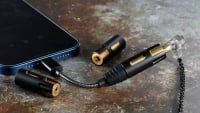
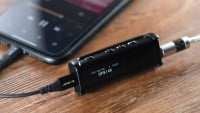
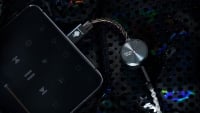
事隔兩年多的時間,Zorloo 為 Ztella 推出第二代了,名為 Ztella II。接駁訊源的一端依舊使用 USB Type-C,做到一插即用,可連接手機、iPad 或個人電腦等等;最大分別是接合耳機的一端,改用上 4.4mm 平衡輸出插口,而輸出功率比上代增強了不少,很容易就可感受得到強大的驅動力。


If you are hitting Command + V and nothing is happening, check these common issues:
App Restrictions: Some secure apps (like certain banking sites or "Incognito" browser windows) may block the ability to capture or paste images.
By default, Mac screenshots save as .png files to your Desktop. If you want to "paste" it immediately without cluttering your files, you must use the Control key modifier. Copy the Entire Screen Press Command + Control + Shift + 3. The image is now held in your temporary memory.
Once the screenshot has been captured using one of the methods above, the image is stored in the clipboard. To place the image into a document, email, or image editor:
By default, macOS saves screenshots as image files (usually .png ) directly to the user's Desktop. To "paste" a screenshot immediately into an email, document, or message, the user must bypass the file-saving step. This is achieved by adding the key to the standard screenshot commands. This action saves the image to the system clipboard, a temporary storage area that allows the image to be transferred elsewhere immediately.
Pasting a screenshot on a Mac is a seamless process, but it works a little differently than on a Windows PC. On a Mac, you aren't just pasting a file; you are pasting an image that has been temporarily stored in a special holding area called the .
To effectively paste a screenshot on a Mac, the user must integrate the key into the standard screenshot shortcut sequence. By utilizing the Command (⌘) + Control (⌃) + Shift (⇧) + 4 sequence, users can streamline their workflow by bypassing the file management stage and inserting visual data directly into active projects.
This effectively "pastes" the image without you ever having to open the file. 4. Pasting via Universal Clipboard (Mac to iPhone)
This is the most common and versatile method. You capture the screenshot directly to your Clipboard, bypassing the desktop entirely.
You will not see a file appear on your desktop. Instead, the image is silently saved to your Mac’s Clipboard.
If you are hitting Command + V and nothing is happening, check these common issues:
App Restrictions: Some secure apps (like certain banking sites or "Incognito" browser windows) may block the ability to capture or paste images.
By default, Mac screenshots save as .png files to your Desktop. If you want to "paste" it immediately without cluttering your files, you must use the Control key modifier. Copy the Entire Screen Press Command + Control + Shift + 3. The image is now held in your temporary memory.
Once the screenshot has been captured using one of the methods above, the image is stored in the clipboard. To place the image into a document, email, or image editor:
By default, macOS saves screenshots as image files (usually .png ) directly to the user's Desktop. To "paste" a screenshot immediately into an email, document, or message, the user must bypass the file-saving step. This is achieved by adding the key to the standard screenshot commands. This action saves the image to the system clipboard, a temporary storage area that allows the image to be transferred elsewhere immediately.
Pasting a screenshot on a Mac is a seamless process, but it works a little differently than on a Windows PC. On a Mac, you aren't just pasting a file; you are pasting an image that has been temporarily stored in a special holding area called the .
To effectively paste a screenshot on a Mac, the user must integrate the key into the standard screenshot shortcut sequence. By utilizing the Command (⌘) + Control (⌃) + Shift (⇧) + 4 sequence, users can streamline their workflow by bypassing the file management stage and inserting visual data directly into active projects.
This effectively "pastes" the image without you ever having to open the file. 4. Pasting via Universal Clipboard (Mac to iPhone)
This is the most common and versatile method. You capture the screenshot directly to your Clipboard, bypassing the desktop entirely.
You will not see a file appear on your desktop. Instead, the image is silently saved to your Mac’s Clipboard.