|
|||||||||||||||
|
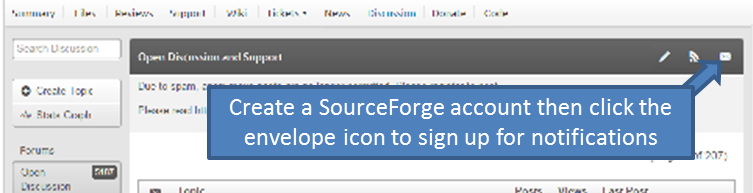
FreeRTOS Support ArchiveThe FreeRTOS support forum is used to obtain active support directly from Real Time Engineers Ltd. In return for using our top quality software and services for free, we request you play fair and do your bit to help others too! Sign up to receive notifications of new support topics then help where you can.
Loading
FreeRTOS tasks can interrupt USB stack implementation?Posted by ddudas on September 24, 2015 Hi all, I'm using ST's CubeMX implementation on a F4 discovery board. I use ST's USB middlewares with FreeRTOS. When I get a special OutputReport from PC side I have to answer nearly immediately (in 10-15 ms). Currently I cannot achieve this timing and it seems my high priority tasks can interrupt the USB callback. What do you think, is it possible? Because it's generated code I'm not sure but can I increase the priority of the USB interrupt (if there is any)? Thank you, David FreeRTOS tasks can interrupt USB stack implementation?Posted by rtel on September 24, 2015 10 to 15 ms is very slow, so I'm sure its possible. Where is the USB callback function called from? If it is an interrupt then it cannot be interrupted by high priority RTOS tasks. Any non interrupt code (whether you are using an RTOS or not) can only run if no interrupts are running. Without knowing the control flow in your application its hard to know what to suggest. How is the OutputReport communicated to you? By an interrupt, a message from another task, or some other way? FreeRTOS tasks can interrupt USB stack implementation?Posted by ddudas on September 24, 2015 The callback which receive the data from PC is called from the OTGFSIRQHandler (it's the part of the HALPCDIRQHandler function). I think the problem is SysTickHandler's priority is higher than OTGFSIRQHandler and it's cannot be modified, but the scheduler shouldn't interrupt the OTGFSIRQHandler with any task handled by the scheduler. Am I wrong that the scheduler can interrupt the OTGFS_IRQHandler? FreeRTOS tasks can interrupt USB stack implementation?Posted by rtel on September 24, 2015 Many developers upload their web builds to itch.io , which supports a "Mobile Friendly" option for browser-based play. Could you clarify what you mean by and "gb studio mobile" ? | Pros | Cons | | :--- | :--- | | Create games anywhere without a laptop. | UI Scaling: Interface can be cramped on phones. | | No Coding Required: Accessible to beginners. | Updates: The mobile port is often several versions behind the desktop release. | | Authentic Output: Exports real .gb files playable on hardware. | Asset Pipeline: Transferring files from PC to Phone and vice versa can be tedious. | | Open Source: Free to use with no royalties. | Touch Precision: Pixel art is difficult without a stylus. | : The engine compiles your project into an actual .gb ROM file that can be played on original hardware or any Game Boy emulator . Technical Limitations to Keep in Mind For creators who do not have pixel art skills, the mobile version includes the same library of sample assets found in the desktop version. This includes pre-made characters, tilesets, and music, allowing a user to build a functional RPG or adventure game entirely from stock parts. Several community-made apps allow you to .gb or .pocket ROMs exported from GB Studio on mobile: Let me know, and I’ll give you a precise, useful answer. : Some community-driven projects have attempted to host the GB Studio editor in a browser. While performance can vary, these versions allow for basic scene editing and scripting directly on a mobile device without a local installation. The official editor does run on iOS or Android. You can't create or edit GB Studio projects on a phone/tablet natively. FreeRTOS tasks can interrupt USB stack implementation?Posted by ddudas on September 24, 2015 Thank you for the answer, I think I'm a bit confused with the Cortex ISR priorities :-) What I can observe is if I use a much higher osDelay in my high priority task I can respond for the received USB message much faster. This is why I think tasks can mess up with my OTG interrupt.
Copyright (C) Amazon Web Services, Inc. or its affiliates. All rights reserved.
|
||||||||||||||




NXP tweet showing LPC5500 (ARMv8-M Cortex-M33) running FreeRTOS.
Meet Richard Barry and learn about running FreeRTOS on RISC-V at FOSDEM 2019
Version 10.1.1 of the FreeRTOS kernel is available for immediate download. MIT licensed.
View a recording of the "OTA Update Security and Reliability" webinar, presented by TI and AWS.
FreeRTOS and other embedded software careers at AWS.