Blockchain Development For Finance Projects Pdf Free Download |top| ✓
Use SongShift to transfer music playlists across streaming platforms and share them with your friends.

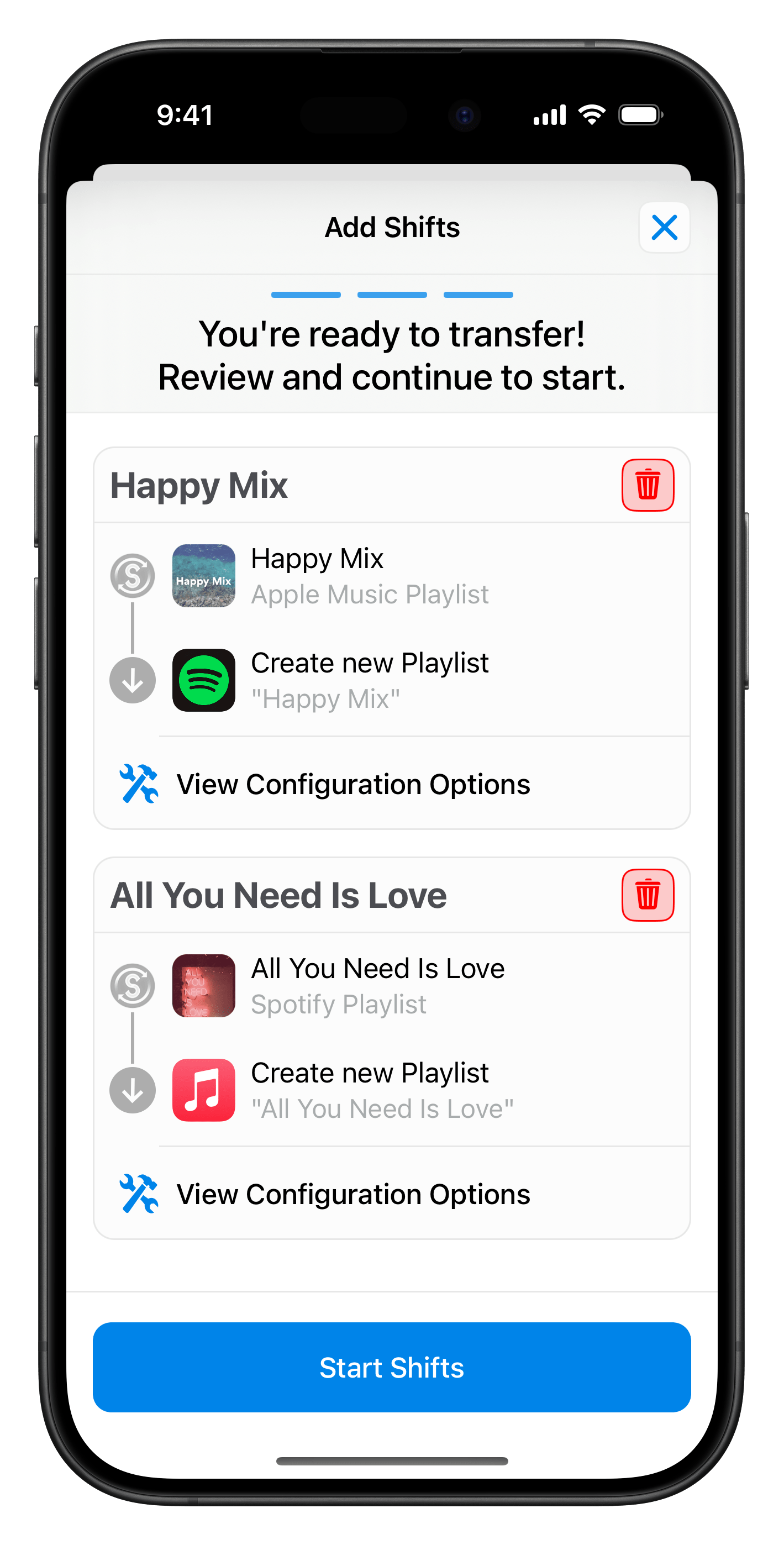
Use SongShift to transfer music playlists across streaming platforms and share them with your friends.

Transfer the music you love to the music provider you want.

Share playlists with anyone, regardless of their music streaming platform.

Sync additions from your playlist to your destination music streaming platform.

Amazon Music

Apple Music

Audiomack
Deezer

Discogs

Hype Machine

LastFM

Napster
Pandora

Qobuz
SoundCloud

Spotify
TIDAL

YouTube
Blockchain technology has evolved from a niche experiment to a mainstream infrastructure for financial services. Its core attributes—decentralization, immutability, transparency, and programmable logic via smart contracts—address long‑standing pain points in finance such as settlement latency, counter‑party risk, and costly legacy systems.
The complexity of merging finance with computer science necessitates rigorous study. Developing for finance requires a dual competency: a deep understanding of cryptographic security and an adherence to financial regulatory standards. Free resources play a pivotal role in lowering the barrier to entry for students and developers in developing economies who may not have access to expensive academic journals or corporate training. The availability of free PDFs on topics such as Solidity programming, Hyperledger Fabric implementation, and the architecture of Central Bank Digital Currencies (CBDCs) ensures that innovation is not gated by financial capital. This democratization of knowledge is essential for the growth of the sector, allowing a diverse cohort of developers to build solutions for cross-border payments, supply chain financing, and automated compliance.
Tip: Use the search query filetype:pdf "blockchain finance" on Google Scholar or directly on the sites above to locate downloadable PDFs that are openly licensed or posted by the authors themselves.
| Pattern | Description | Typical Stack | When to Use | |---------|-------------|---------------|-------------| | | Consortium of known entities; privacy‑preserving; governed by a legal framework. | Hyperledger Fabric, R3 Corda, Quorum | Trade finance, inter‑bank settlement, regulated markets | | Public‑First (Hybrid) | Public chain for tokenomics, private side‑chain for confidential data. | Ethereum + Polygon zk‑Rollup, Solana + Wormhole bridge | Tokenized assets with compliance layers | | Layer‑2 Scaling | Off‑chain transaction batching with on‑chain finality proofs. | Optimistic Rollups, zk‑Rollups, State Channels | High‑throughput payments, DeFi, micro‑transactions | | Oracle Integration | External data feeds (price, KYC/AML) fed into smart contracts. | Chainlink, Band Protocol, custom API‑to‑contract adapters | Derivatives, stablecoins, compliance triggers | | Zero‑Knowledge Privacy | Proofs that data satisfies a condition without revealing the data itself. | zk‑SNARKs/zk‑STARKs, Aztec, Mina Protocol | Confidential settlements, GDPR‑compliant data sharing | Blockchain technology has evolved from a niche experiment
For professionals seeking a deep dive, you can find the complete Blockchain Development Guide for Finance Projects (PDF) and additional technical resources at Mercadito Digital . Core Pillars of Blockchain in Finance
Financial applications typically require high security, scalability, and sometimes privacy, leading to the use of both public and private networks. Blockchain Technology Overview
However, the search for free PDFs also raises the issue of intellectual property rights. While the blockchain community champions "open source," this does not negate the copyright held by authors and commercial publishers. Many technical books found via informal "free download" searches are pirated content, which undermines the creators who produce these essential learning materials. It is crucial for the integrity of the developer community to distinguish between legitimate open-access resources—such as Creative Commons licensed textbooks, GitHub repositories, and official documentation—and pirated copyrighted works. Reliance on unauthorized copies not only poses legal risks but often results in utilizing outdated information, a critical failure point in a technology that evolves as rapidly as blockchain. Developing for finance requires a dual competency: a
| Topic | Open‑Access Source | Example PDF (Free) | |-------|--------------------|--------------------| | Blockchain fundamentals | | “A Survey on Blockchain Technologies” (arXiv:2103.00020) | | Finance‑focused DLT | SSRN (search “blockchain finance”) | “Blockchain in Financial Services” – pre‑print, free download | | Regulatory frameworks | European Commission – MiCA documentation | “Regulation on Markets in Crypto‑Assets (MiCA)” – PDF | | CBDC research | Bank for International Settlements (BIS) | “Central Bank Digital Currencies: Foundational Principles and Core Features” – PDF | | Technical standards | Hyperledger – documentation hub | “Hyperledger Fabric Architecture” – PDF | | Smart‑contract security | Consensys Diligence – blog & guides | “Smart Contract Security Best Practices” – PDF |
The convergence of distributed ledger technology and financial services has moved beyond the "buzzword" phase into a era of critical infrastructure. Implementing blockchain in finance can lead to a and a 78.3% decrease in cross-border processing times .
This report examines the current landscape, architectural patterns, key development tools, regulatory considerations, and best‑practice guidelines for building blockchain‑based financial applications. This democratization of knowledge is essential for the
Source: CB Insights, BIS, and proprietary market‑research aggregates (2024).
Democratizing Decentralized Finance: An Analysis of Resources for Blockchain Development in the Financial Sector
The realm of blockchain development is unique because it is rooted in a culture of openness and transparency. Unlike traditional banking sectors where knowledge is often proprietary, the blockchain ecosystem thrives on shared protocols and open-source code. Consequently, a vast repository of high-quality literature is legally available for free. When aspiring developers search for PDF downloads, they are often looking for "White Papers"—the foundational documents of projects like Bitcoin and Ethereum—which are universally free. Furthermore, many legitimate educational platforms and non-profit organizations, such as the Linux Foundation’s Hyperledger project or university blockchain research centers, publish comprehensive guides and textbooks under open licenses. These resources serve as the bedrock for understanding how distributed ledgers can be applied to settlements, smart contracts, and tokenization.